Unlocking Creativity with Easy 3D Adding Puzzles KDP Practice File
Understanding the Structure of 3D Adding Puzzles
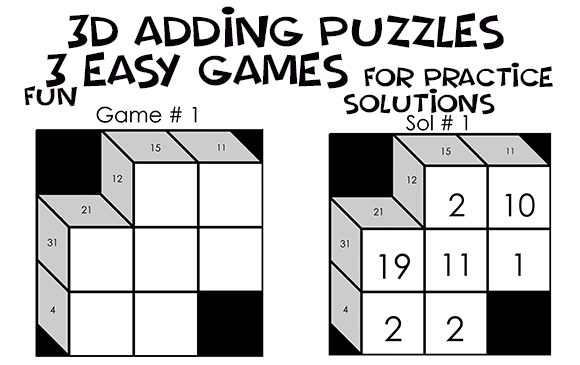
The Easy 3D Adding Puzzles KDP Practice File offers a unique twist on traditional logic puzzles, drawing inspiration from Kakuro, also known as “Cross Sums.” These puzzles combine mathematical reasoning with spatial awareness, challenging users to fill in a grid based on numerical clues. Each puzzle presents a grid of black and white cells, where black cells contain diagonal slashes with numbers indicating the sum of digits in adjacent white cells. The top-right number applies to the horizontal sequence, while the bottom-left number corresponds to the vertical sequence.
Unlike standard Kakuro puzzles, the 3D variation introduces a layered approach, requiring solvers to think beyond a single plane. This added complexity makes the Easy 3D Adding Puzzles KDP Practice File a valuable tool for educators, puzzle enthusiasts, and creators looking to publish engaging low-content books on platforms like Kindle Direct Publishing (KDP).
Designing for Print: Image Specifications and Layout
The practice file includes high-quality JPG images sized at 8.5 x 8.5 inches, ensuring crisp and clear print output. These dimensions are ideal for creating square-format puzzle books, offering a balanced layout for both visual appeal and usability. Each image features a white background, which maintains contrast and readability, although transparency is not supported in the current format.
Each puzzle is uniquely numbered, allowing creators to easily organize and renumber pages using the included PowerPoint (.pptx) file. This flexibility is especially useful for those customizing the content for specific audiences or repurposing the puzzles across multiple publications.
Customization Options for Creators
One of the standout features of the Easy 3D Adding Puzzles KDP Practice File is its adaptability. Users can modify fonts and styles through the Master Slide in PowerPoint, giving the puzzles a personalized aesthetic. However, caution is advised when making such changes, as altering fonts can affect the positioning of numbers within the puzzle grid. In some cases, manual adjustments may be necessary to maintain alignment and clarity.
This level of customization empowers creators to maintain brand consistency or tailor the visual presentation to suit different age groups or difficulty levels. Whether designing a children’s puzzle book or a brain-training workbook for adults, the ability to tweak design elements ensures the final product meets specific stylistic and functional goals.
Preparing for KDP Upload: File Conversion and Page Setup
While the Easy 3D Adding Puzzles KDP Practice File provides a solid foundation for puzzle creation, it is not immediately ready for direct upload to KDP. The included PDF file serves as a reference for those planning to convert their designs into a publishable format. Creators will need to manually assemble pages, ensuring proper bleed, margins, and page count alignment to meet KDP’s print-on-demand requirements.
This process involves combining individual puzzle images into a cohesive document, typically using design software like Adobe InDesign or Canva. Understanding how to structure pages correctly is crucial for maintaining a professional appearance and avoiding formatting issues during printing. The extra effort required in this step ultimately results in a polished, market-ready product that stands out in the competitive self-publishing space.
Educational and Recreational Applications
These puzzles serve multiple purposes beyond entertainment. Educators can integrate them into math curricula to enhance students’ logical thinking and arithmetic skills. The 3D format adds a spatial reasoning component, encouraging learners to visualize solutions across multiple dimensions. This cognitive engagement supports brain development and problem-solving abilities, making the Easy 3D Adding Puzzles KDP Practice File a versatile resource for classroom activities or homeschooling materials.
For hobbyists and puzzle enthusiasts, these games offer a refreshing challenge that differs from traditional Sudoku or crossword puzzles. The blend of math and logic appeals to those who enjoy strategic thinking and pattern recognition. Additionally, creators can leverage these puzzles to build niche puzzle books that cater to specific interests, such as math competitions or brain-training guides.
Target Audiences and Use Cases
The versatility of the Easy 3D Adding Puzzles KDP Practice File makes it suitable for a wide range of users:
- Professionals: Content creators and indie authors can use these puzzles to develop engaging, low-content books for Amazon KDP.
- Educators: Teachers and curriculum designers can incorporate these puzzles into lesson plans to reinforce mathematical concepts in an interactive way.
- Parents: Homeschooling families can benefit from using these puzzles to supplement math education in a fun and challenging format.
- Hobbyists: Puzzle lovers can enjoy hours of brain-teasing entertainment or use the templates to create personalized puzzle collections.
- Business Owners: Print-on-demand entrepreneurs can leverage these puzzles to launch niche puzzle books with minimal upfront investment.
Optimizing for SEO and Audience Engagement
From an SEO perspective, the Easy 3D Adding Puzzles KDP Practice File aligns well with informational search intent. Potential keyword phrases include:
- “3D adding puzzles for KDP”
- “printable Kakuro puzzle books”
- “low-content book templates for Kindle”
- “math logic puzzles for kids”
- “customizable puzzle files for Amazon KDP”
By incorporating these terms naturally throughout content, creators can enhance the visibility of their products and attract targeted traffic. Additionally, providing practical insights and real-world applications increases the perceived value of the resource, supporting E-E-A-T (Experience, Expertise, Authoritativeness, Trustworthiness) principles.
Final Thoughts on Implementation and Adaptation
While the Easy 3D Adding Puzzles KDP Practice File offers a robust foundation for puzzle creation, success depends on thoughtful implementation. Creators should consider the following best practices:
- Test the layout: Preview pages in both digital and print formats to ensure clarity and proper alignment.
- Offer variety: Include puzzles with different difficulty levels to cater to a broader audience.
- Provide solutions: Ensure answer keys are accurate and easy to reference, enhancing user experience.
- Brand consistently: Customize fonts, colors, and headers to align with your publishing brand or niche.
- Engage your audience: Encourage feedback and incorporate suggestions for future puzzle variations or themes.
By approaching the creation process with intention and attention to detail, users can transform the Easy 3D Adding Puzzles KDP Practice File into a compelling, marketable product that resonates with puzzle lovers and educators alike.