Pain Journal: A Practical Tool for Managing Chronic Discomfort
Chronic pain affects millions of people worldwide, influencing daily life, mental health, and overall well-being. For those seeking a structured approach to understanding and communicating their pain experiences, a Pain Journal can be a valuable resource. Designed to help users track symptoms, identify patterns, and improve communication with healthcare providers, this tool offers a straightforward yet effective method for managing discomfort over time.
What Is a Pain Journal?
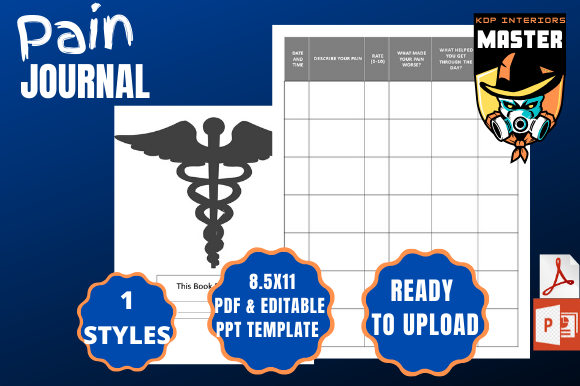
A Pain Journal is a guided workbook that allows individuals to document their pain symptoms, triggers, emotional responses, and treatment outcomes. It typically includes prompts for daily entries, pain scales, mood tracking, medication logs, and space for notes. The goal is to create a consistent record that can be reviewed over time to identify trends and inform treatment decisions.
This particular Pain Journal is formatted for immediate use. It includes 100 pages of structured templates in a downloadable PDF format, along with a PowerPoint file for presentation or customization. Designed with bleed-on settings and an 8.5x11 inch dimension, it’s optimized for print and digital use, especially for those planning to upload it to Kindle Direct Publishing (KDP) or similar platforms.
Why Someone Might Be Interested in a Pain Journal
There are several reasons someone might consider using a Pain Journal:
- Improved Self-Awareness: Tracking pain daily helps users recognize patterns and potential triggers.
- Better Communication with Healthcare Providers: A well-maintained journal offers concrete data to support discussions during medical appointments.
- Support for Mental Health: Writing about pain can provide emotional relief and a sense of control.
- Monitoring Treatment Effectiveness: Users can compare symptoms before and after interventions to assess what works.
Key Benefits of Using a Pain Journal
The structured format of a Pain Journal provides several practical benefits:
- Consistency: Daily prompts encourage regular entries, which are essential for identifying long-term trends.
- Customization: The included PowerPoint file allows users to modify templates to suit their specific needs.
- Portability: As a downloadable PDF, it can be used on multiple devices or printed as needed.
- Ready for Publication: With KDP formatting already applied, this journal is ideal for authors or health professionals looking to distribute pain management tools.
Considerations and Tradeoffs
While a Pain Journal can be highly beneficial, it’s important to understand its limitations and how it compares to alternative tools:
- Digital vs. Paper: Some users prefer mobile apps for pain tracking due to built-in reminders and data visualization. However, a printable journal may be more appealing to those who enjoy writing by hand or have privacy concerns.
- Time Commitment: Consistent journaling requires dedication. If a user struggles with routine, they may find the process burdensome.
- Depth of Insight: While a journal helps identify trends, it doesn’t replace professional medical advice or psychological support.
- Accessibility: A PDF-based journal requires access to a printer or digital note-taking device, which may not be available to everyone.
When This Pain Journal Is a Strong Fit
This Pain Journal is particularly well-suited for:
- Individuals Managing Chronic Pain: Those with conditions like fibromyalgia, arthritis, or migraines can benefit from long-term tracking.
- Patients Preparing for Doctor Visits: Having a documented history of symptoms can make consultations more productive.
- Health Coaches or Practitioners: Professionals who work with pain patients may find this journal a helpful tool to recommend or customize.
- KDP Authors: Because the journal is formatted for KDP with bleed-on settings and 100 pages, it’s ready for upload and publication without additional design work.
When Alternatives May Be Worth Considering
In some cases, a different approach might be more appropriate:
- For Tech-Savvy Users: Mobile apps like MyTherapy or PainScale offer reminders, analytics, and cloud backup that a PDF journal can’t match.
- For Short-Term Use: If someone only needs to track pain for a few weeks, a simple notebook or spreadsheet might suffice.
- For Mental Health Focus: Those seeking emotional support may benefit more from a general wellness journal or therapy sessions than from symptom tracking alone.
- For Minimalist Tracking: Some people prefer quick, one-line entries rather than structured templates. In such cases, a more flexible format could be better.
How to Decide If This Pain Journal Is Right for You
When evaluating whether this Pain Journal aligns with your needs, consider the following questions:
- Do you need a structured way to track your pain symptoms? If yes, a dedicated journal can help establish consistency.
- Are you preparing for upcoming medical appointments? A journal with detailed entries can improve the quality of care you receive.
- Do you value print or digital formats over mobile apps? If so, a downloadable PDF with print-ready formatting may be ideal.
- Are you looking to publish a pain journal on KDP? If yes, this product is already optimized for upload and includes both PDF and editable PPT files.
- Do you prefer customizable templates? The inclusion of a PowerPoint file allows for personalization to fit your specific tracking preferences.
Final Thoughts
A Pain Journal is more than just a notebook—it’s a strategic tool for managing discomfort and improving communication with healthcare providers. Whether you're navigating chronic pain yourself or supporting someone who is, this journal offers a clear, structured, and practical way to document your experience.
With its 100-page format, KDP-ready design, and instant download availability, this version of the Pain Journal is especially valuable for those who want a ready-to-use or publishable resource. However, like any tool, its effectiveness depends on consistent use and personal fit.
If you're seeking a tangible, customizable, and professional-grade way to track pain, this Pain Journal may be a strong addition to your self-care routine or professional offerings.